

Drax lifts 2026 earnings outlook & medium-term goals
Mon, 23rd Nov 2026 (Today)
Drax has raised its earnings expectations for 2026 and set higher medium-term financial targets. Full-year adjusted EBITDA is now expected to come in significantly above market consensus.
The upgrade follows what Drax described as strong system support and generation performance in September and October, which added about £50 million to its net contracted power position for 2026, alongside further gains from balancing market activity.
Analyst consensus for 2026 adjusted EBITDA stood at £721 million, with estimates ranging from £710 million to £736 million.
At its capital markets briefing, Drax outlined an ambition for adjusted EBITDA of £800 million to £900 million in 2029 from its existing business and committed developments, rising to more than £1 billion in 2031 including further investment. This implies average annual adjusted EBITDA growth of more than 12% between 2027 and 2031, with dividend per share growth of more than 10% a year over the same period.
Drax expects to generate more than £3 billion of free cash flow between 2026 and 2031. Combined with balance sheet capacity, this would give it more than £3.5 billion to fund investment and shareholder returns.
Of that total, around £1.5 billion has already been allocated to the Bluefield Solar Income Fund acquisition and existing battery energy storage developments. More than £1 billion remains available for further investment in solar, wind and flexible generation, while about £0.8 billion is earmarked for shareholder returns over the period.
Portfolio shift
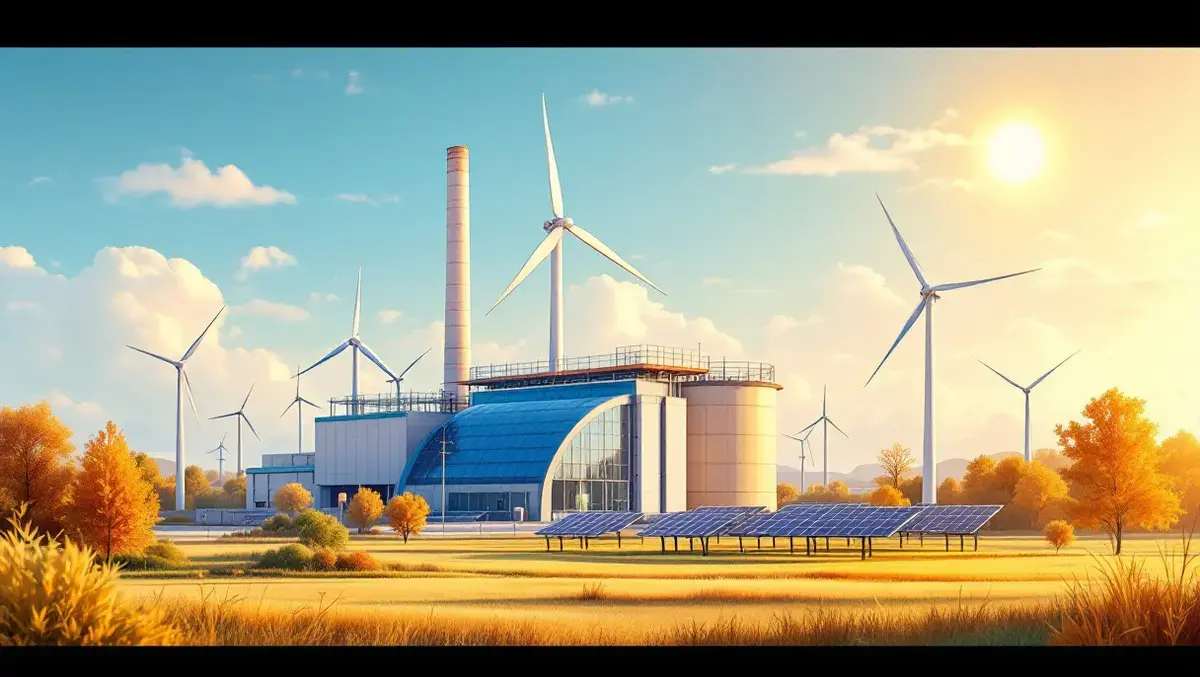
Drax is repositioning its generation mix away from heavy reliance on biomass and towards solar, wind and flexible assets. It expects solar, wind and flexible generation to account for the majority of group-adjusted EBITDA by 2029.
Managed capacity rose from 4.0GW to 6.2GW between 2025 and 2026 following the acquisitions of Bluefield Solar Income Fund and Flexitricity, as well as the commissioning of the first of three open-cycle gas turbines. Drax plans to increase that figure to 7.6GW by 2029 based on existing commitments, and said further development and acquisition opportunities could lift the portfolio to about 9GW by 2031.
The group has also raised its long-term leverage target to about 2.5 times net debt to adjusted EBITDA, from around 2 times previously. The change reflects lower business risk and Drax's evolution from a single-site merchant generator to a broader multi-technology portfolio.
Financing and projects
Drax completed a £300 million five-year term loan in October and issued a €1 billion bond with a five-and-a-half-year maturity in November. It used the proceeds to repay the bridging facility that funded the Bluefield Solar Income Fund acquisition and other term loans.
Net debt to adjusted EBITDA should be around 2 times in 2026, including the Bluefield Solar Income Fund deal, before falling below 2 times by the end of 2027.
Operationally, Drax had more than £1 billion of contracted forward power sales between 2026 and 2028 on its renewables obligation biomass, pumped storage and hydro assets, with more than £800 million of associated renewables obligation certificates. Since its previous update, it has added 2.5TWh net to that position at an average price of about £158 per MWh across the three years.
That total includes about 2TWh of merchant biomass generation in summer 2027, above the volume specified in its low-carbon dispatchable contract for difference arrangement.
Drax has also taken final investment decisions on three solar projects in northern England representing about 130MW and roughly £120 million of investment. The projects are backed by 15-year contracts for difference and are expected to enter service in 2028.
Separately, the group agreed to acquire Bluefield Services, which provides asset management, operations and maintenance, construction management and pipeline development services to Bluefield Solar Income Fund and its subsidiaries.
Data centre plan
Drax also gave further detail on plans for a large data centre at the Drax Power Station estate in North Yorkshire. It has signed an agreement to develop a strategic partnership with Radiant, Brookfield and Qai to develop, deliver and operate an AI data centre on the site.
The project could deliver gigawatt-scale capacity across three phases, and the agreement provisionally values powered land at about $1 million per MW across the full scheme. Drax added that Radiant has been in discussions with potential tenants for the first phase.
The power station estate covers more than 1,000 acres and has about 4GW of grid access, with 2.6GW of active dispatchable generation. Drax has also formally requested 1.2GW of import capacity from the system operator as it examines longer-term uses for the site.
"The UK needs energy security and routes for decarbonisation which are affordable, whilst at the same time encouraging investment to support economic growth. Demand for power is expected to double by 2040 and, as the share of gas generation reduces, there is an increased need for more generation across the board, including solar and wind, and the dispatchable flexible generation to support those and help keep the lights on when the wind isn't blowing and the sun isn't shining," said Will Gardiner, Chief Executive Officer of Drax.
"Starting from a strong foundation of system-critical assets in Drax Power Station and Cruachan Pumped Storage Hydro, the group is building a scalable portfolio of flexible and renewable generating assets in the UK, designed to benefit from the growth in renewable power and the resulting need for flexible assets to support the system.
"The group is broadening its generation portfolio, resulting in higher-quality earnings supported by an integrated trading and optimisation platform designed to capture more value from every megawatt.
"Growth is underpinned by a strong balance sheet and a clear capital allocation policy, combining dividend growth with reinvestment at attractive risk-adjusted returns."