

Giesecke+Devrient outlines five banknote security checks
Mon, 16th Nov 2026 (Today)
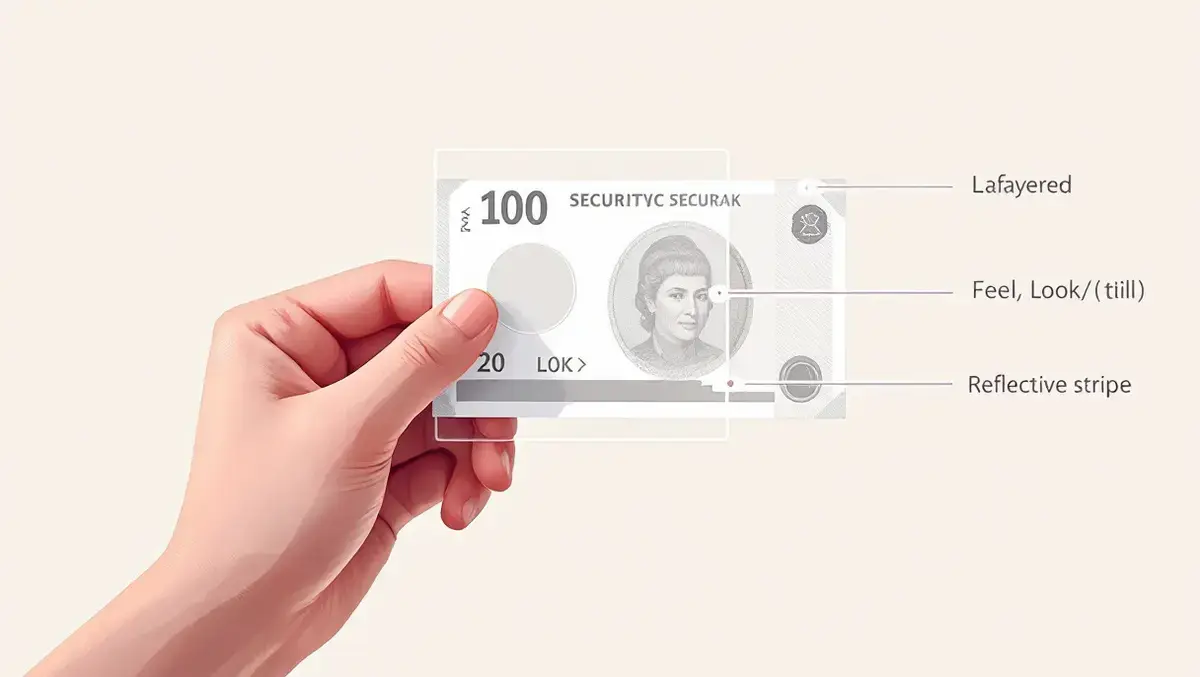
Giesecke+Devrient has outlined five security features used in modern banknotes and highlighted three checks consumers can use to spot fakes. The checks follow the "feel, look, tilt" approach used by central banks.
The Munich-based currency technology group said modern banknotes rely on several layers of protection rather than a single feature. These include elements visible to the public, machine-readable markers used in the cash cycle, and covert features that only central banks can verify.
One of the most basic checks is how a note feels. Most currencies are printed on cotton-fibre substrates rather than ordinary paper, giving them a distinctive texture and greater durability in circulation.
Raised print is another feature that can be checked by touch. Certain printed areas stand proud of the surface, making them harder to reproduce with standard paper and printing methods.
Holding a note up to the light reveals further markers. Watermarks are created during substrate production through variations in thickness, producing visible light and dark gradations. Embedded security threads appear as continuous lines when viewed this way.
On some notes, the thread also contains fine negative text such as the denomination. Because both the watermark and the thread are built into the material, they cannot simply be added as surface print.
The final public test is to tilt the note. This can reveal colour changes and motion effects in security foils, threads and specialist inks.
These effects depend on optical structures that reflect light in controlled ways. Some of the most secure versions use micromirrors and nanostructures, with up to one million micromirrors fitting into an area the size of a thumbnail.
Machine Checks
Not all anti-counterfeit measures are designed for the public. In commercial banks, central banks and retail settings, automated processing and verification equipment uses sensors to detect features that are not visible in normal handling.
These include inks that react under ultraviolet light or absorb infrared light, as well as magnetic coding carried in security threads. Such features allow large volumes of notes to be checked quickly during sorting, deposit handling and recirculation.
At the highest level are covert features reserved for central banks. These can be authenticated only with dedicated sensors, and the technical details are kept secret to help identify sophisticated counterfeits.
The company presented the explanation as concern about fraud remains a recurring issue for consumers, retailers and financial institutions. Physical cash continues to circulate widely in many markets, meaning banknotes must withstand repeated handling while remaining verifiable both manually and by machine.
Felix Ehrtmann, Product Manager for Integration + Print at G+D Currency Technology, said the combination of fast public checks and deeper technical safeguards remains central to note design.
"Above all, cash must be reliable in everyday life," said Felix Ehrtmann, Product Manager for Integration + Print at G+D Currency Technology. "Consumers can reliably verify the authenticity of a banknote in just a few simple steps. At the same time, retailers and banks must be able to process large volumes of banknotes quickly and securely. This requires multiple layers of security features that complement each other and together provide effective protection against counterfeiting."
Giesecke+Devrient said it employs more than 14,500 people and generated EUR €3.2 billion in turnover in the 2025 financial year, with operations spanning 118 subsidiaries and joint ventures in 41 countries.