

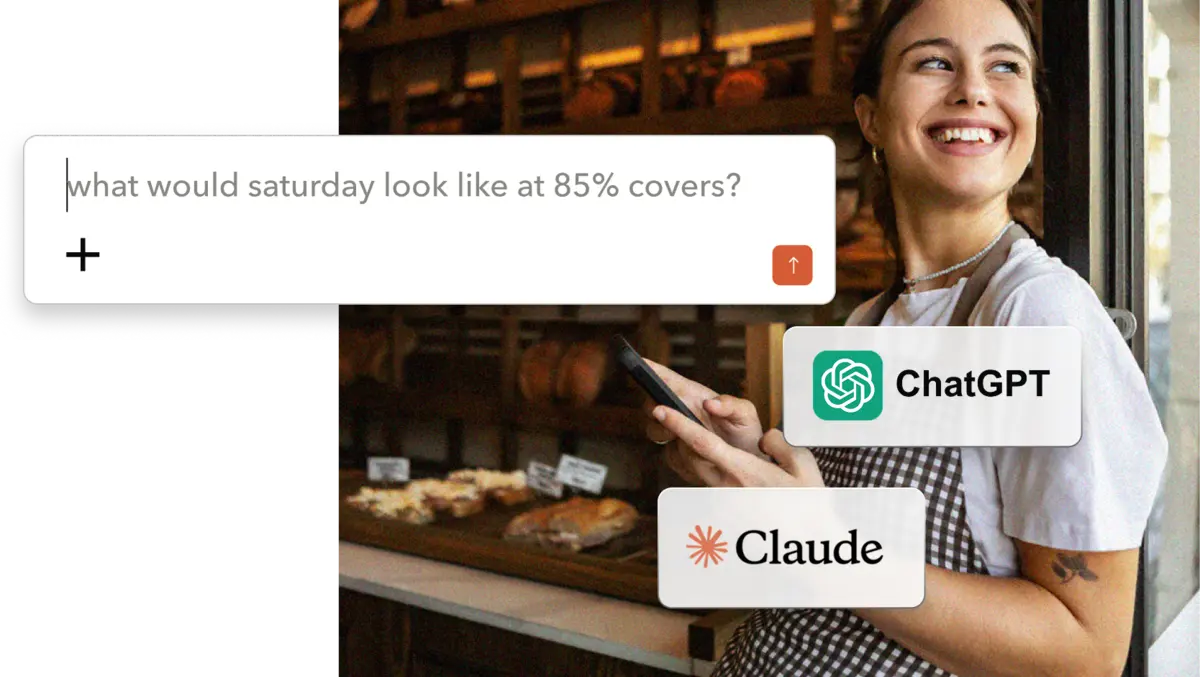

Planday has made its workforce management platform available through ChatGPT and Claude, becoming the first workforce management platform with verified connectors for both AI assistants.
The move lets managers at shift-based businesses pull Planday scheduling information into either assistant, combine it with other connected data sources, and make staffing changes within the same conversation. More than 216 customers connected their Planday accounts during an early-access rollout, according to the company.
Managers can use the set-up to review rota data alongside external factors that may affect staffing levels, such as weather forecasts, local events, or booking data if the assistant is also linked to other business systems.
In one example, a restaurant manager could compare current bookings and a weekend weather forecast with existing rota data to identify where extra cover may be needed. The same process can also be used when a worker calls in sick, helping a manager assess the impact and find available cover without switching between systems.
Actions available through ChatGPT and Claude include drafting new shifts and reassigning staff. Any changes still require user confirmation before they are applied.
Data controls
The connectors use the same permissions and data controls already in place within the platform. Users can carry out only the actions through ChatGPT or Claude that they are already authorised to perform in Planday.
The connectors cannot access sensitive information, including bank details, payroll records, and National Insurance numbers. Access is available globally to Planday customers at no additional cost during the early-access period.
The launch reflects a broader push by software providers to connect operational business systems with general-purpose AI assistants. For workforce management vendors, the challenge has been to let users draw on live scheduling data and other business context without weakening existing access controls.
Planday focuses on employers with shift-based operations, where staffing decisions often change quickly because of swings in demand, staff absence, and local conditions. Those decisions are rarely made on rota data alone, the company said.
Dave Lee, Chief Executive Officer at Planday, said: "Shift-based businesses are faced with constant change, and managers rarely make staffing decisions based on the rota alone. Local events, weather and changes in demand can all affect the number of people needed for a shift, while understaffing puts greater pressure on the people working and impacts the service they provide. Planday scheduling data can be combined with richer context from external sources, all within the AI assistants managers are increasingly using to support decision-making. Managers can now run their rota from the AI assistant they already use, allowing them to anticipate and respond to workforce requirements to better support on-shift workers and customers."
Planday, which was acquired by Xero in 2021, was founded in 2004 and is headquartered in Copenhagen. It says it supports more than 400,000 users across Europe and the US.