Arm stories
Against a backdrop of AI-driven job losses and skills shortages, the 2027 awards aim to spotlight women whose work could widen tech talent.
Strong demand for women-focused tech leadership events was shown by an inaugural Cambridge gathering that drew 160 people and a 150-plus waiting list.
The package will fund chips, a supercomputer and skills training, as ministers seek to build domestic AI capacity and speed workplace adoption.
The city region is drawing more investors and employers as nearly USD $1 billion has flowed into its AI firms since 2010.
Teams running AI agents at scale could save idle compute and tighten isolation as Google opens Agent Substrate on Kubernetes Engine.
Demand for AI data-centre networking is pushing iPronics to scale its optical switch platform after a USD $125 million Series B.
Embedded systems now make up nearly a third of the electronics market as edge AI shifts design priorities towards security and software.
The move deepens Nvidia's grip on AI server design as cloud customers seek tighter integration, lower power use and faster deployment.
Customers running memory-heavy databases and analytics could gain up to 25% more compute per vCPU as AWS expands its Arm-based cloud server line-up.
The hire is intended to speed AI product development and deepen StructureFlow's appeal to legal and financial services firms.
Security checks will now cover more Arm processors, as the chip designer broadens use of Arteris' Radix tool to spot flaws earlier.
The financing will fund MSAI's largest sovereign hardware deployment to date, with new compute installed in Scotland for UK-based AI customers.
The deal will give procurement teams access to a larger pricing dataset spanning USD $75 billion in indirect spend, boosting negotiation insight.
Windows PCs with up to 128GB of unified memory could let developers and creators run larger AI models locally, Microsoft said.
The move broadens Arm-based computing into budget PCs, as Qualcomm targets student and small business buyers with all-day battery life and AI features.
Platform teams can trim Kubernetes cloud bills by up to 70% without surrendering control, using recommendations before fixes are applied.
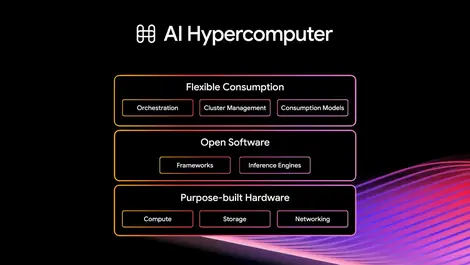
Customers will soon get faster, cheaper AI training and inference as Google Cloud adds new TPUs, GPU instances and networking.
The fresh capital will help expand cloud operations as demand surges for faster, cheaper AI inference across mixed chip architectures.
Automation projects may be easier to trust as BlueAlly adopts NetBox Labs' infrastructure data platform across customer deployments.
The chipmaker is boosting US investment as AI demand strains advanced capacity and pushes full-year spending higher.