Data Security stories
Security teams are increasingly using AI to build internal tools, but many still lack approval and audit controls, prompting ThreatAware's new platform.
Nearly half of finance and insurance staff using AI at work have pasted sensitive information into tools without employer approval, a survey found.
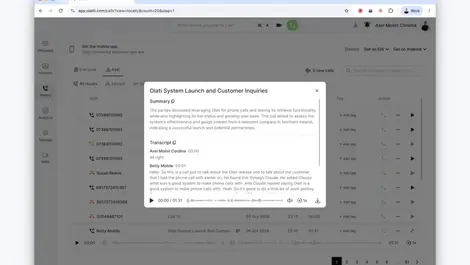
Users must approve the wording first, as Olatti now lets Claude and ChatGPT draft and send messages inside its business phone platform.
Delayed banking integrations are still forcing UK firms to rely on manual finance work, as 27% wait more than nine weeks to go live.
The vast majority of ANZ firms are still struggling to prove AI pays off, with many lacking budgets, governance and reliable data foundations.
Singapore firms are facing mounting losses from security gaps, with 71% hit by a major incident in the past year, the report says.
Many workers still act on sensitive digital requests without checking the sender, raising the risk of AI-driven impersonation scams.
The move places Illumio in a vendor-neutral model that helps organisations judge how to contain breaches in increasingly connected AI systems.
Organisations are being urged to tighten controls as AvePoint says 88.4% have already suffered at least one AI agent-related security incident.
It aims to curb credential sprawl and reduce the risk of compromised AI agents using persistent secrets to move across enterprise systems.
The rollout aims to help companies patch AI-driven systems faster, as Google adds identity, perimeter and detection controls across its cloud security stack.
Growing regulatory scrutiny is pushing mid-market firms in Australia and New Zealand to prove who owns AI tools, what they access and how they are controlled.
Security teams can now prioritise AI agent exposures by linking permissions to sensitive data across business systems, Reco said.
The average breach cost of USD $2.2 million underlines why many firms may be underestimating their file security gaps, the survey found.
Yet governance, cyber and workforce readiness are lagging as most firms push AI beyond pilots, Kyndryl research finds.
The move gives businesses running sensitive AI workloads hardware-enforced protection for prompts, model weights and intermediate data in Google Cloud.
Partners can now trial private AI workloads locally as the hosted kit helps them assess compliance, latency and sovereignty before production.
AI-related identity risks are driving more organisations to seek tighter access controls as Netwrix turns to partner-led growth under Tony Orlando.
Fewer than half of Australian firms say their AI foundations are ready for more autonomous systems, Cisco's research found.
Businesses and creators could cut cloud reliance as MSI widens its laptop push beyond gaming with local AI processing and broader productivity features.