Deepfakes stories
Businesses can now use a three-second selfie to recheck users in GBG Go, helping curb promo abuse and account takeover without restarting KYC.
Rising fraud and AI-powered impersonation are leaving banks under pressure to improve checks, as 69% of Britons doubt they could spot a deepfake fraudster.
Britons are more likely than peers abroad to spot phishing, but many still fail to flag suspicious messages, leaving scams to spread further.
More than four in 10 finance and insurance staff using AI at work have shared sensitive data without their employer’s knowledge, a survey found.
Many workers still act on sensitive digital requests without checking the sender, raising the risk of AI-driven impersonation scams.
Most organisations now face employee identity attacks, with phishing and stolen credentials pushing insider risk into boardroom-level concern, a survey finds.
Synthetic fraud is slipping past standard checks, prompting banks to use real-time address matching to tie identities to physical locations.
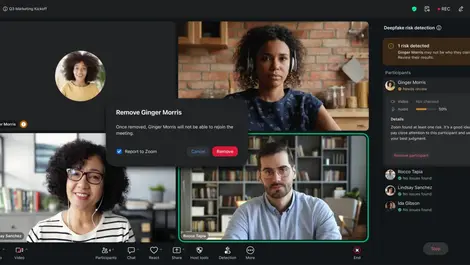
Businesses using Zoom will gain tighter oversight of AI-generated content and deepfake risks, as new controls target compliance and data handling.
Boards are being warned that AI, identity and software supply chain gaps are outpacing controls, leaving organisations more exposed to fast-moving attacks.
Synthetic fraud is now costing banks and insurers USD $40 billion a year, with voice cloning and video deepfakes driving most cases.
Banks and insurers face rising losses as deepfake fraud is now estimated at USD $40 billion a year, with voice cloning fuelling most cases.
Billions still offline and fraud on the rise as the GSMA pushes for 5G returns, cheaper handsets and global 6G standards.
The bust seizes 187 laptops in Texas and exposes a remote hiring fraud that infiltrated more than 70 US companies, officials said.
Only 5% of Australian companies are ready for AI-driven attacks, leaving most exposed as threat actors move at machine speed.
The trade association says current laws may be too slow for AI-powered attacks that can identify weaknesses and launch cybercrime with less expertise.
The findings suggest companies are exposing email and payment systems to software agents faster than they can secure them, widening phishing risk.
Employers can now flag fake applicants earlier as concern grows over deepfakes, stolen identities and forged documents in remote hiring.
The shortlist spans every mainland state plus Tasmania and the ACT, showing Australian tech exporters are winning overseas customers in niche markets.
More than a third of Singapore office workers could not tell a real CEO message from an AI fake, leaving firms open to fraud.
Many Singapore office workers still worry about questioning bosses, leaving firms exposed as 35% of senior managers said they would comply with a cloned CEO voice before checking.