Enterprise security stories
The London start-up will use the funding to expand autonomous attack testing as firms face more frequent, AI-driven cyber threats.
Backers are betting that enterprise AI oversight will need sharper tools, as the security software company brings total funding to USD $140 million.
As organisations roll out passkeys beyond pilots, the alliance gains enterprise input on interoperability, recovery and lifecycle management.
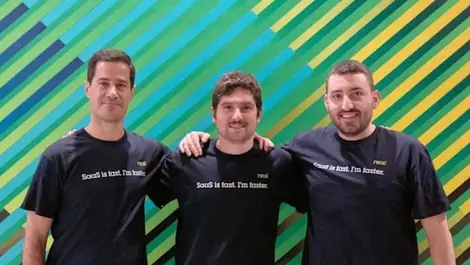
The deal lifts Reco's total funding to USD $140 million as enterprises race to govern AI agents linked to sensitive systems and data.
The platform is designed to help firms expose and protect sensitive data as AI assistants and machine identities widen access paths across systems.
Businesses in the US and EMEA can now tap 24/7 AI-led cyber monitoring as KDDI aims to ease compliance pressure and response delays.
Attackers are using AI to speed up, scale and automate probes, forcing organisations to tighten governance, data flow and incident testing.
A flaw in Anthropic's MCP Python SDK could let malicious servers steal credentials and take over accounts through apparently legitimate logins.
Security teams can now generate deception playbooks in minutes, as AI-assisted attacks and enterprise AI systems raise the stakes for defenders.
The deal gives Xopero a foothold in AI governance as businesses race to stop prompt injection and data leaks from generative tools.
The appointment comes as BlueVoyant scales its sales push around Microsoft-linked security tools and AI after a solid third quarter.
The hire comes as BlueVoyant broadens its AI security portfolio and seeks sharper revenue execution amid rising demand for clearer cyber outcomes.
Shorter certificate lifespans are driving more enterprises to automate renewals, lifting DigiCert's Trust Lifecycle Manager annual recurring revenue 38% year on year.
The expansion gives security teams clearer oversight of staff and autonomous agents as businesses rush to embed generative AI in daily work.
The move adds a veteran tech investor to guide the firm's push into enterprise and government customers as software supply-chain scrutiny intensifies.
Enterprise leaders are under pressure to prove cyber spend cuts risk as 5Tattva reports stronger demand for resilience testing and threat intelligence.
CIOs are facing growing pressure to strengthen defences without adding cost or complexity as cloud, hybrid work and AI widen security risks.
Despite leading on passkeys and MFA, Indian firms still face widespread AI phishing and deepfake scams that are undermining daily security practice.
It gives security teams a way to run AI agents on-site, avoiding cloud exposure and token-based charges in tightly controlled environments.
Security teams can now test whether AI agents stay within bounds before giving them wider access, as Cloud Range's framework seeks to cut operational risk.










.webp)