

.webp)
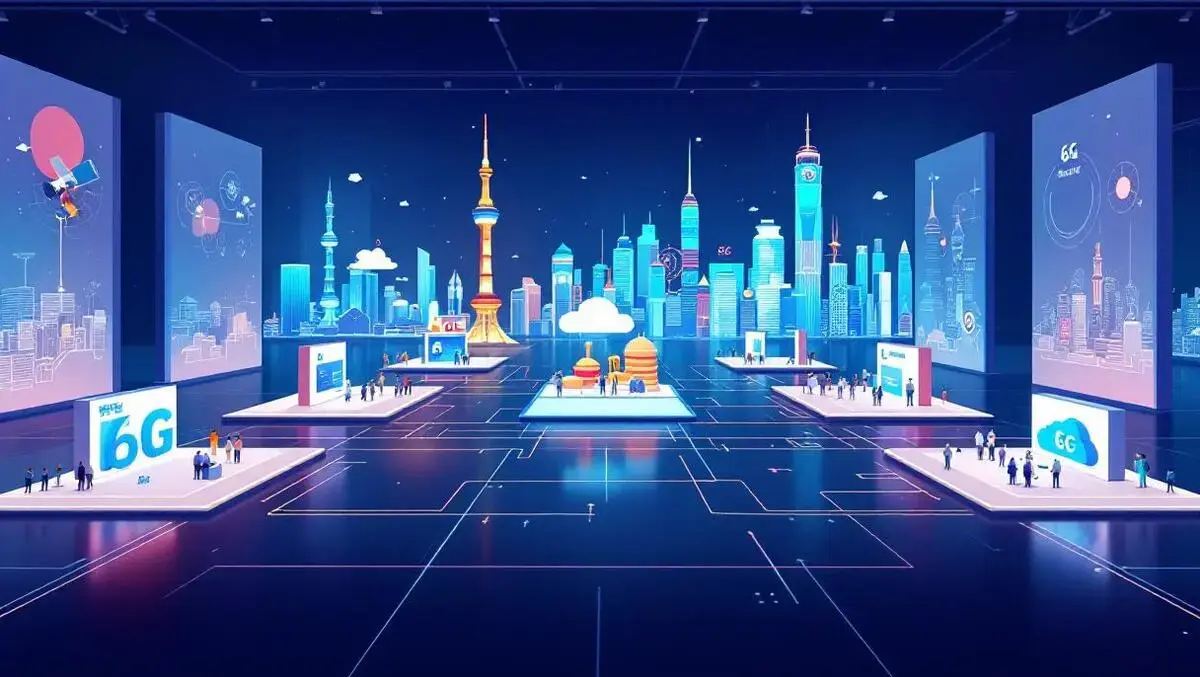
The GSMA has added six themed zones to MWC Shanghai, broadening the event's focus on mobile and related technologies.
The new areas cover mobile artificial intelligence, satellite communications, digital transformation, smart cities, 6G and eSIM. They join the show's existing elements as the mobile industry group looks to draw operators, equipment suppliers, government bodies and technology companies into a broader discussion about connectivity and industrial use cases.
Among the additions, the Global Innovation Pavilion is positioned as an international hub for government agencies, trade organisations and industry alliances. It will focus on building partnerships across AI, 5G-Advanced, 6G, cloud services, satellite links, digital trade and smart industry projects.
Exhibitors named for the pavilion include Gyeongsang Province in South Korea, NTT Data, the UK Department for Business and Trade and UNICEF. The GSMA also listed a broader group of confirmed exhibitors across the event, including AgiBot, AliCloud, Honor, Huawei, Lenovo, SingTel, SMIC, Telenor and ZTE.
AI and Satellite
A second new area, Mobile AI Innovation Frontiers, will centre on practical demonstrations of mobile AI systems. Developed with China's three major mobile operators through a Mobile AI Joint Working Group, the zone will showcase technologies ranging from silicon and AI models to robots, vehicles and smart glasses.
The launch reflects a growing effort by telecoms groups to define their role in AI beyond network operations. By placing AI devices and applications alongside connectivity infrastructure, the event presents mobile networks as part of a broader technology stack rather than a stand-alone service.
The satellite segment will receive a dedicated area for the first time under the name Constellations of the Future. The zone will focus on links between terrestrial mobile networks and non-terrestrial systems, an area drawing increasing industry and policy attention as operators and satellite companies explore direct-to-device services and broader coverage models.
Companies listed for the satellite section include APT Mobile Satcom, China Starwin Science & Technology, Geespace, Hefei Rhosoon Intelligent Technology, Iridium, LQ SpaceAI, PlusXtech, SPACE AIC, Spacesail and TeleCommerce. The emphasis reflects a broader push to bring satellite services closer to mainstream mobile infrastructure and device ecosystems.
Industry Focus
The Digital Transformation Verticals Zone will highlight sector-specific applications in manufacturing, healthcare, automotive, financial technology and sustainability. Exhibitors and speakers in the area will use demonstrations and stage sessions to show how digital tools are changing operations across industries.
That cross-industry approach underlines how telecoms events have evolved in recent years. Earlier editions were dominated by handsets and network equipment, but the current format gives more space to enterprise adoption, public sector deployments and the use of mobile technologies in factories, hospitals and transport systems.
The City Pavilion will bring in municipal and regional authorities looking to showcase smart city programmes and attract outside investment. The zone will also highlight local businesses, including smaller companies, involved in digital transformation through connectivity, open data and interoperable payment systems.
Beijing will feature in the City Pavilion through a Solution Pavilion involving 16 companies, while Shanghai's Pudong District will also take part. The inclusion of city administrations reflects the event's continued interest in public-private projects tied to urban technology and digital infrastructure.
6G and eSIM
The 6G Zone will provide space for research and development work that remains largely at an early stage. It will offer a view of China's 6G progress and move some of the discussion from research settings into a commercial industry forum.
Although 5G rollout remains incomplete in many markets, equipment makers, operators and policymakers have begun setting out positions on the next generation of mobile standards. China has been one of the most active markets in that early work, making Shanghai a useful platform for companies and institutions looking to shape the debate.
The eSIM Zone will cover the supply chain behind embedded SIM technology, including operators, module makers, device manufacturers and platform providers. Named exhibitors include Beijing Huahong, China Unicom, Chutian Dragon, HED, Lenovo Connect, Tongxin Micro, Watchdata, Wise Security Technology and Yoocar Network Technology.
The GSMA linked the area to growth in the internet of things, citing its forecast that licensed IoT connections will rise from 2.5 billion in 2022 to 5.3 billion by 2030. The projection helps explain why eSIM has become a more prominent focus for operators and device makers looking for simpler ways to connect large fleets of products.
Sihan Bo Chen, Head of Greater China at GSMA, outlined the organisation's view of the regional market. "The ideas and ambition coming out of Asia's industry, cities, and governments right now are pushing the ecosystem in directions that would have seemed inconceivable a few years ago - from AI to 6G, the technologies that will define the next decade of connectivity are taking shape in real time. Where better to experience this than at MWC Shanghai, where Asia's digital ecosystem meets the world and partnerships are formed," Chen said.