

ThetaRay launches game to spot money mules in crowd
Thu, 4th Jun 2026.webp)
ThetaRay has launched an online game, Spot The Money Mule, and presented it at Money20/20 Europe in Amsterdam.
The game asks players to identify a money mule hidden in five crowded everyday scenes, including an airport and a tulip festival. It is designed to show how difficult it can be to spot people used to move illicit funds and to link that challenge to the role of artificial intelligence in financial crime monitoring.
Money mules transfer or receive money on behalf of criminals, often after being recruited through fraud or deception. Banks, payment groups and regulators have warned that recruitment has moved further into digital channels, where young people and other vulnerable users can be approached through social media, gaming platforms and messaging apps.
The launch reflects a broader effort by financial technology groups to explain compliance risks in simpler, public-facing formats. Rather than focusing only on bank operations teams and investigators, firms are increasingly trying to raise awareness among consumers who may be targeted by criminal networks.
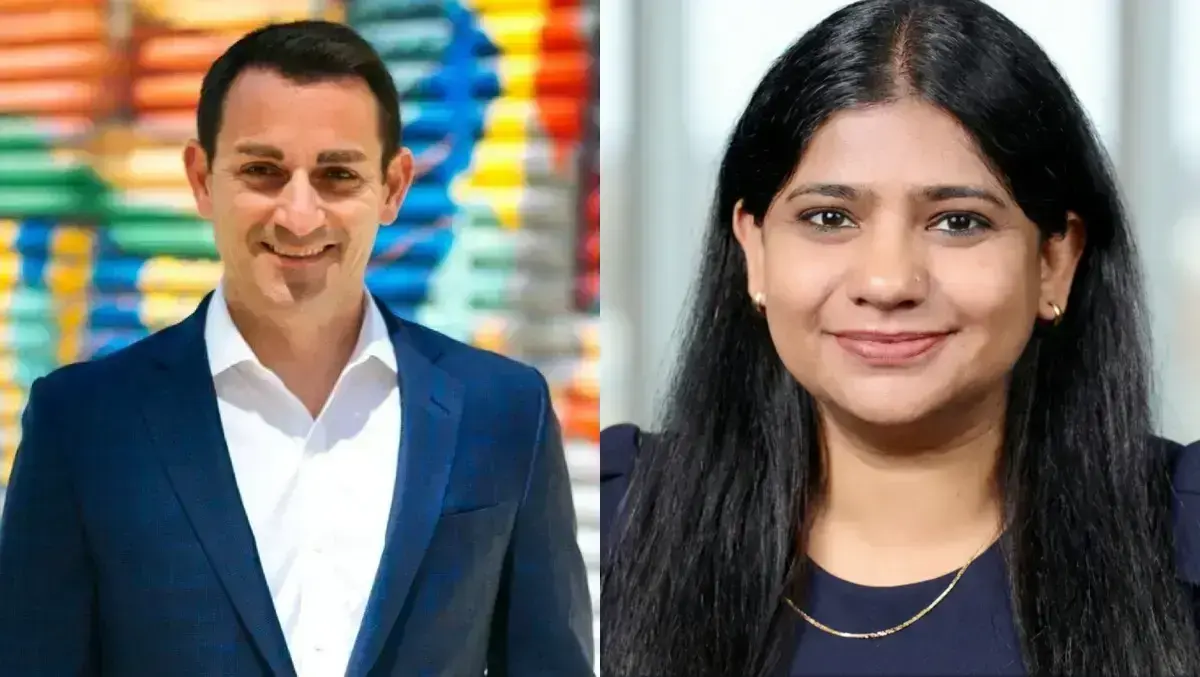
Garima Chaudhary, Vice President of Financial Crime & Compliance AI at ThetaRay, linked the game's premise to the company's core technology.
"In the AI age, the most dangerous threats are those that blend perfectly into the speed of our digital lives," Chaudhary said.
She added: "In the game, you look for a 'Known' face. In the real world, there is no obvious profile. While humans struggle to spot one person in a crowd, our AI monitors behavioral baselines to detect invisible patterns in millions of transactions that are undetectable to the naked eye."
The game's scenes include crowded transit hubs and market-style settings intended to mirror online spaces where mule recruitment is growing, with individuals blending into ordinary digital activity much as suspects disappear into a dense physical crowd.
Public awareness
The launch is also part of a wider call for a coordinated response across the sector. ThetaRay argues that regulators, banks and technology providers need to work together to help the public recognise recruitment tactics linked to fraud and money laundering.
Brad Levy, Chief Executive Officer at ThetaRay, said that effort should not fall on one part of the market alone.
"Fighting financial crime is an ecosystem mission, not a solo one," Levy said.
He added: "We're moving in lockstep with the latest mandates from the FCA and Europol, which have warned that money mule recruitment is now targeting victims as young as 12 in the digital spaces where they live and play. While we provide our partners - from tier-1 banks to digital challengers - with Ray Platform, our investigative AI suite that overlays legacy systems, we're also answering the global call for transparency set by the new EU AMLA. By uniting technology and an informed public, we support a unified defense for a more resilient financial system."
The reference to Europol and the Financial Conduct Authority reflects a growing policy focus on mule accounts across Europe. Supervisors are increasing pressure on financial institutions to improve detection, while law enforcement agencies have highlighted how organised crime groups exploit online communities and younger users.
The consumer push follows the earlier launch of Ray, ThetaRay's investigative AI suite. The product extends the company's existing detection tools into case investigation by combining automated investigative work with analyst input, with the aim of improving case resolution times and making investigations more consistent across teams and jurisdictions.
ThetaRay says its systems sit on top of existing bank infrastructure rather than replacing it. That is significant for institutions still reliant on older transaction monitoring systems, where new compliance demands often must be met without a full rebuild of underlying technology.
Sector pressure
The market for anti-money laundering and fraud technology has shifted as banks face tighter scrutiny over explainability and governance in AI systems. In Europe, new oversight structures and transparency expectations are pushing providers to show not only that a system can identify risk, but also how it reached a conclusion and whether investigators can review that path.
That pressure has created an opening for companies that present AI tools as traceable and suitable for audit processes, particularly in higher-risk compliance work. ThetaRay is positioning its offering around that argument while also trying to widen the conversation beyond compliance departments to the general public.
The company lists customers including Santander, ClearBank, Mashreq Bank and Payoneer. Its latest consumer-facing launch suggests that, alongside selling software to financial institutions, it sees public education as part of the fight against illicit finance.