

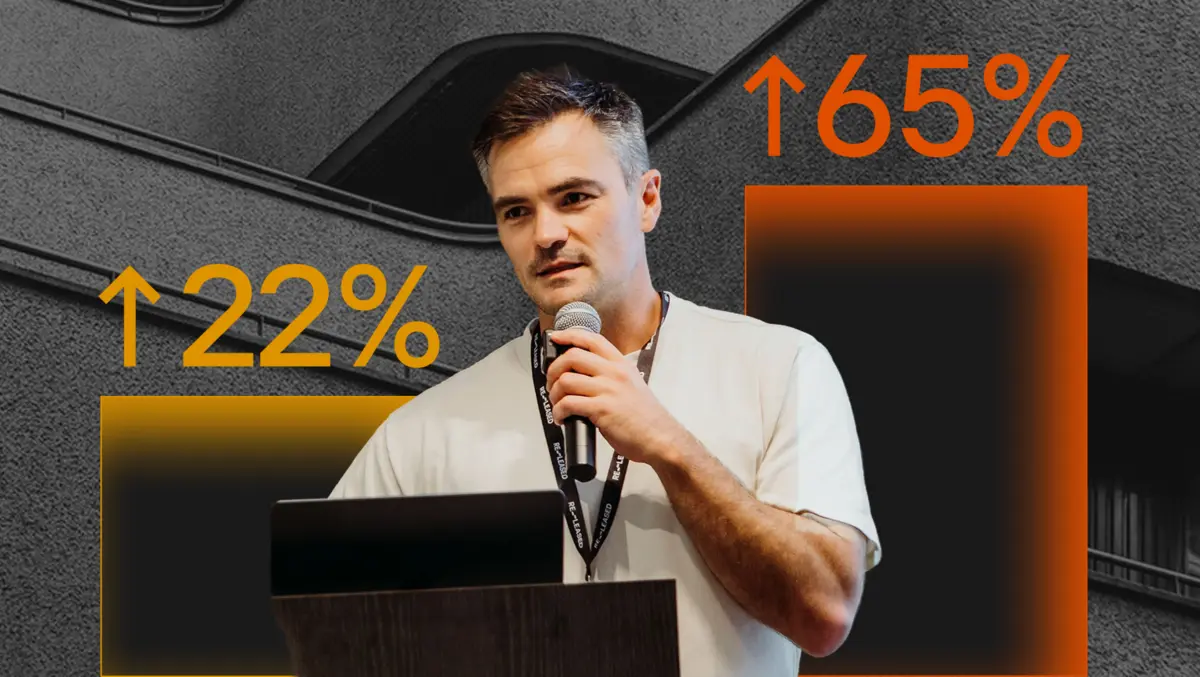
UK landlords boost AI use to 65% as adoption widens
Wed, 5th Aug 2026
UK commercial landlords have increased their active use of artificial intelligence to 65%, according to research published by property software company Re-Leased.
That marks a sharp shift from the previous year, when 22% of UK landlords reported active use of AI, including both extensive and pilot deployment. At the same time, the share still exploring AI without using it fell to 13% from 70%, suggesting many organisations have moved from evaluation to implementation.
Even so, most of that uptake remains at an early stage. Among UK landlords, 52% said their AI use was limited or in pilot deployment, while 13% said the technology was used extensively across their businesses.
The findings suggest the market has largely moved beyond asking whether to adopt AI. Instead, landlords appear to be focusing on how to fit the technology into routine operations.
Tom Wallace, Chief Executive Officer and Founder of Re-Leased, said the UK market had changed quickly. "The decision has been made. Most UK landlords are no longer asking whether AI matters. They are working out where it fits inside real operations and how to move from a pilot to something embedded and reliable," Wallace said.
Operational focus
The research suggests early use is concentrated in administrative and financial work rather than more experimental areas. Lease administration and abstraction was the most common use case among UK landlords already using AI, cited by 49% of respondents.
Rent collection and financial management followed at 33%, while portfolio reporting and analytics stood at 31%. Compliance and risk management and tenant communications were each named by 26% of landlords using AI.
The pattern suggests landlords are directing AI towards repetitive tasks with clear commercial value. In practice, back-office work and core portfolio management functions are getting attention before broader or less defined applications.
In a property sector shaped by lease documentation, payment processes and regulatory obligations, those areas are among the most structured parts of the business. They also suit tools that can reduce manual work and improve consistency across large portfolios.
Reported outcomes appear to support that approach. Among UK landlords already using AI, 66% said they had seen measurable positive results. The most common benefit was a reduced administrative burden, cited by 45% of active users.
Barriers remain
The report also indicates that implementation challenges remain significant for landlords that have not yet moved into active use. The main obstacles were not financial.
Lack of in-house technical expertise and difficulties integrating AI with existing systems were each reported by 22% of respondents. Resistance to change followed at 18%, while cost ranked much lower at 7%.
The figures suggest that for many landlords, the issue is less about willingness to spend and more about the practical work of fitting new tools into established software, workflows and teams. In a sector that often relies on long-standing operational systems, integration may be a more immediate concern than budget approval.
Spending intentions also point to continued commitment. Nearly half of UK landlords, 49%, said they planned to increase AI and technology spending in 2026, while none said they intended to cut it. A further 18% were unsure.
That leaves spending reductions effectively absent from the survey, a notable position at a time when many businesses are still testing returns on new technology investments. For commercial landlords, the research suggests the debate has shifted to execution and prioritisation rather than whether AI should remain on the agenda.
Wallace said the next stage would depend on stronger delivery inside organisations. "For the majority still in pilot or limited use, the priority is not more exploration but sharper execution: picking the right use cases, solving the integration problem, and building the internal capability to make it stick. The window to close the gap is open, but it will not stay open indefinitely," Wallace said.
The survey covered commercial landlords in the United Kingdom, the United States, New Zealand and Australia. Re-Leased said it serves property managers, landlords and investors across those markets and manages more than 470,000 leases worldwide, including more than 300,000 in the UK.