

PowerUp completes battery-swapping energy pilot in Nigeria
Fri, 26th Jun 2026.webp)
PowerUp has completed a battery-swapping energy pilot in Port Harcourt, Nigeria, backed by the UK's Ayrton Fund.
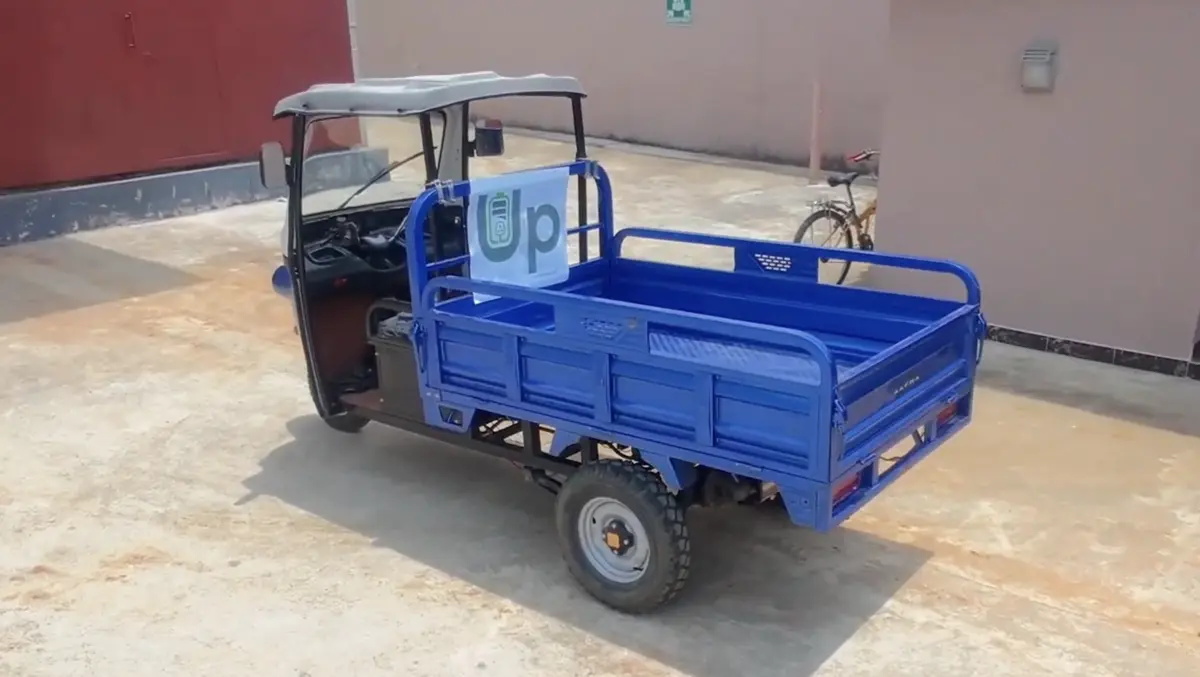
The Doncaster-based start-up used its Battery Energy Distribution System to deliver electricity by transporting charged batteries to end users and returning depleted units for recharging.
The pilot was part of ZEBRAS, or Zero-carbon Energy Battery Resource-as-a-Service, one of six international demonstrator projects supported by more than £4.85 million in Ayrton Fund backing from the Department for Energy Security and Net Zero.
Under the model, batteries are charged at renewable energy hubs, loaded onto electric delivery vehicles and taken directly to homes, communities and businesses without dependable access to grid electricity. They are then swapped out and returned for recharging, creating what PowerUp described as a closed-loop service.
How It Works
The demonstration combined swappable lithium-ion batteries, renewable charging infrastructure, electric vehicles and an AI-based monitoring platform. The project was led by MEP Technologies and involved Nevadic, The Washing Machine Project, Skrum and PowerUp.
The initiative targets areas where diesel and petrol generators still fill gaps left by weak or absent electricity networks. These generators remain widely used across emerging economies despite fuel costs, air pollution and maintenance demands.
According to figures cited by PowerUp, around 1.5 billion people globally do not have reliable access to electricity. More than 25 million fossil fuel generators also remain in operation across emerging markets.
The Port Harcourt deployment offers an example of an alternative model in which electricity is moved physically rather than through fixed wires. The approach could appeal in remote areas, on constrained networks and in places where extending conventional grid infrastructure is too costly or too slow.
UK Backing
The project also reflects UK government support for clean energy systems that can be deployed outside Britain. The Ayrton Fund brings together official development assistance spending on clean energy research, development and demonstration across several government departments.
Founded in 2021, PowerUp focuses on off-grid energy delivery. It uses commercially available technology to move electricity from places where it can be generated and stored to places where supply is limited.
Its work to date has focused on construction sites, infrastructure operators and industrial users facing grid constraints, but the Nigeria pilot shows broader potential for community energy access.
David Collinson, Co-founder of PowerUp Off-Grid Services, said the project was designed to show that energy does not have to remain fixed to where it is generated.
He said: "The Ayrton Fund has enabled this project to demonstrate that energy does not have to remain fixed to where it is generated. By physically moving stored clean energy to where it is needed most, we can help support communities and businesses that cannot rely on traditional grid infrastructure. For decades, fuel has been physically delivered to places pipelines and wires cannot reach. We believe clean electricity must now do the same."
The broader ZE-Gen programme is designed to test practical routes for reducing dependence on fossil fuel generation in underserved regions. The Nigeria demonstrator adds to evidence for battery-swapping systems as a possible way to supply power where conventional grid expansion is difficult.
Lily Beadle, Programme Director, ZE-Gen, said: "ZEBRAS highlights the strength of UK clean energy innovation and international collaboration, with British companies creating collaborative international partnerships to develop practical, scalable solutions that address real-world energy challenges while supporting the global transition to affordable, reliable and modern energy."