

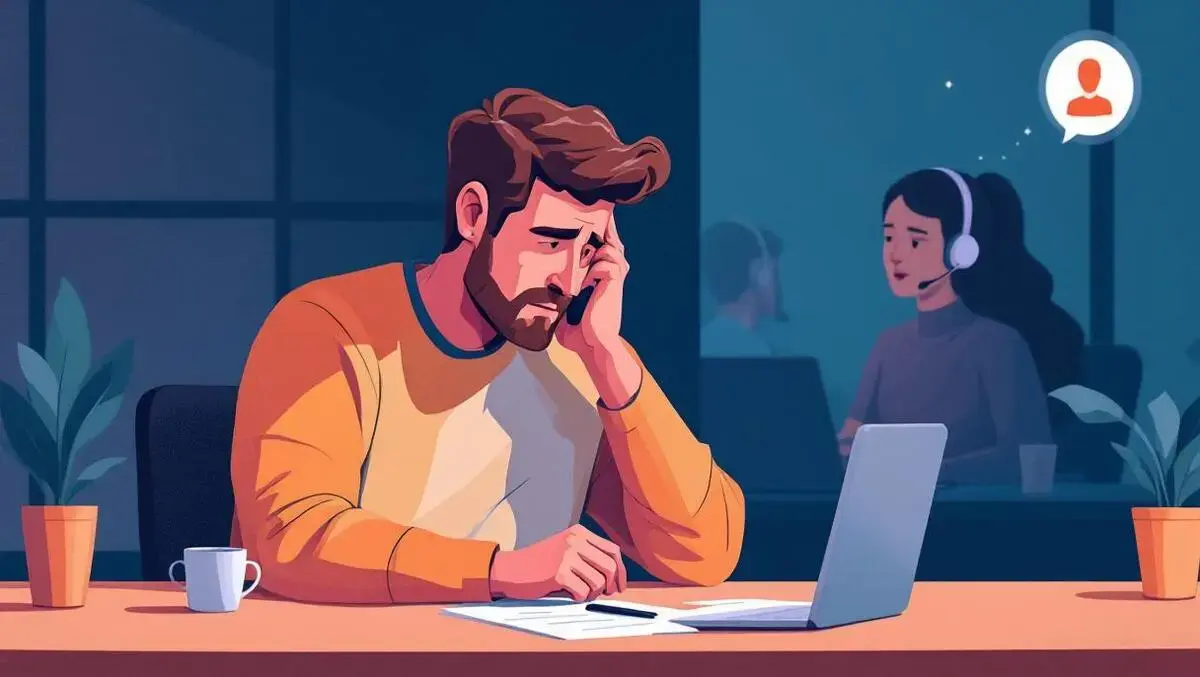
UK consumers screen calls amid contact centre trust gap
Tue, 19th May 2026
MaxContact has published research showing that UK consumers are increasingly screening calls from unknown numbers and ignoring legitimate business contacts, highlighting a widening trust problem for contact centres.
The study surveyed 1,000 UK consumers who had interacted with a contact centre in the previous 18 months. It found that 69% always or often screen calls from unknown numbers. Half had ignored a message from a legitimate company because they assumed it was fraudulent, while only 22% strongly agreed they could tell when an unexpected company contact was genuine.
Those habits are already having consequences for consumers as well as businesses. Among respondents who said they had ignored a legitimate call, 77% reported a real consequence, including missed payments, appointments or service interventions.
The figures suggest the breakdown in engagement often happens before a conversation begins. For contact centres, that raises questions about outbound calling performance and whether organisations can still rely on phone contact in sectors where scam concerns have changed customer behaviour.
Sector differences
Some industries face more resistance than others. Loans, credit and debt management firms were the most avoided, with 37% of consumers saying they would be least likely to answer a call from that sector.
Insurance ranked next at 25%, while technology, telecoms, retail and eCommerce each recorded avoidance levels of 22% to 23%. Banks and building societies performed better, with 16% of consumers saying they would be least likely to answer calls from those organisations.
The variation suggests trust is shaped not only by general concern about scams, but also by the type of business making the call. Firms in more sensitive sectors may need clearer ways to identify themselves and explain the purpose of their contact before customers will engage.
AI disclosure
The research also examined how consumers view the use of AI and automation in customer contact. It found broad acceptance of the technology in principle, but strong demand for transparency when it is used.
According to the survey, 88% of UK consumers said it is important for companies to clearly disclose when AI is being used. Another 87% said they believed they had interacted with AI or automation during a recent contact with a company.
Within that group, 22% said they were sure or fairly sure they had interacted with AI without realising it at the time. The report suggests undisclosed automation may add to the same uncertainty that is already leading many people to ignore unexpected calls and messages.
The issue is becoming more important as businesses use a wider mix of automated and human-led contact across customer service, collections, support and account management. If consumers are unsure who is contacting them, or whether the interaction is genuine, they may opt out before any issue can be resolved.
Ben Booth, chief executive officer of MaxContact, said the findings should prompt a rethink across the sector.
"This data should make every contact centre leader pause. Consumers broadly trust the sectors they deal with, but that trust doesn't translate into picking up the phone. The clear differences between the sectors confirm that the problem isn't just sentiment; it's the inadvertent signals being sent out. If consumers can't tell the difference between a legitimate call and a scam, outbound strategies will struggle to deliver," Booth said.
The survey points to a broader operational problem rather than a simple reputational one. If customers routinely ignore contact attempts, unresolved issues may build up and organisations may need to spend more to reach the same people through other channels.
That could be especially relevant in areas such as financial services, insurance and utilities, where firms may need to contact customers about payments, policy changes, service problems or urgent account matters. In those cases, low answer rates may create commercial and compliance risks as well as customer service delays.
Booth said uncertainty, rather than hostility, was driving much of the behaviour.
"This trust gap is something that needs to be rectified. It's the culmination of consumer frustration, the prevalence of scams, and the use of AI, and consumers don't know who to trust anymore. It's not hostility, but uncertainty that is resulting in the call screening barriers, which is why we need to address this as a matter of urgency," Booth said.
The study was commissioned by MaxContact and conducted as an independent survey of UK adults aged 18 and over. All respondents had interacted with a company contact centre through at least one channel in the previous 18 months.
"The Trust Gap is a solvable problem - but only for businesses willing to treat trust as an operational priority, not a brand one. That means being transparent about how you use AI, giving consumers clear signals of legitimacy before you dial, and recognising that the channel choices you make send a message before a word is spoken. The contact centres that will win in 2026 are the ones that earn the right to be answered," Booth said.