

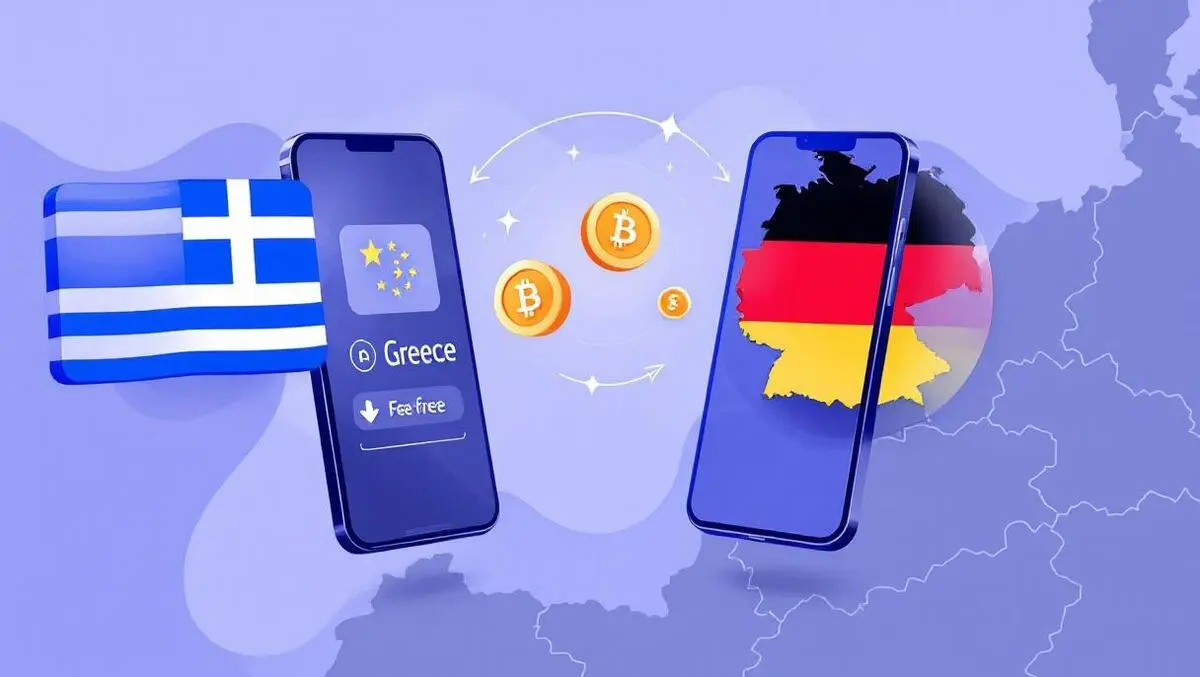
Viber Pay brings instant, fee-free payments to seven European nations
Thu, 20th Nov 2025
Viber has expanded its financial services offering across seven European markets, integrating Paynetics' payments infrastructure and Visa's network within its messaging platform for improved peer-to-peer money movement.
Product integration
The latest update to Viber Pay enables users in Slovenia, Slovakia, Lithuania, Estonia, Greece, Cyprus, and Germany to send and receive money instantly with no fees. Users are also issued a Visa virtual debit card, allowing them to make seamless online payments within the app. Over one million digital wallets have been created through the service to date.
Paynetics' regulated payments infrastructure has been embedded directly into Viber's existing environment. This covers the full transaction value chain-issuing, KYC and AML compliance, cross-border transactions, and account management-allowing Viber to offer the new features without acquiring a banking licence itself. Viber's user interface remains unchanged, maintaining a familiar messaging experience while adding financial functionality.
"Our collaboration with Paynetics is an important milestone in our vision to become a super app. With Paynetics' trusted infrastructure, we can give millions of users instant, fee-free financial services embedded in the conversations they already have every day," said Ritesh Shah, GM of Fintech and VP of Business Solutions, Rakuten Viber.
Operational model
This approach allows Viber to operate across multiple regulatory jurisdictions by relying on Paynetics' licences. The regulated service provider manages compliance obligations such as anti-money laundering and transactional controls. At the same time, Viber can continue expanding its core offering with financial products without entering the highly regulated banking space.
For Paynetics, the rollout of Viber Pay showcases the practical viability of embedded finance beyond the remit of specialist fintech platforms.
"Paynetics is proud to power Viber Pay and demonstrate how embedded finance can scale across borders. This launch shows the potential of European fintech: secure, compliant, and deeply integrated into platforms people use most," said Valeri Valtchev, CEO, Paynetics.
European context
While Asian technology ecosystems, such as WeChat, have already established messaging-based financial services, Europe faces additional regulatory challenges due to differing national licensing regimes. Viber Pay's structure offers an alternative, allowing consumer-facing apps to embed licensed banking infrastructure while retaining the user relationship.
The method aligns with ongoing trends in embedded finance, where non-financial online services integrate payments or card issuance without seeking direct authorisation as financial entities. These platforms utilise regulated providers to facilitate transactions and compliance across diverse jurisdictions, reducing the barrier for entry and potential regulatory risks.
Fintech implications
The upgraded Viber Pay highlights several shifts for the technology and financial sectors in Europe. Financial product distribution is moving towards high-traffic consumer platforms rather than being limited to standalone banks or challenger fintech firms. Embedded finance infrastructure determines product scaling potential. User adoption leverages existing networks, altering customer acquisition strategies in the space.
Viber Pay is now one of the most visible large-scale pilots of embedded payments inside a consumer messaging environment in Europe, rather than a dedicated financial app.
Whether this approach can support more advanced financial services in the future while navigating Europe's regulatory landscape remains a focus for the industry.